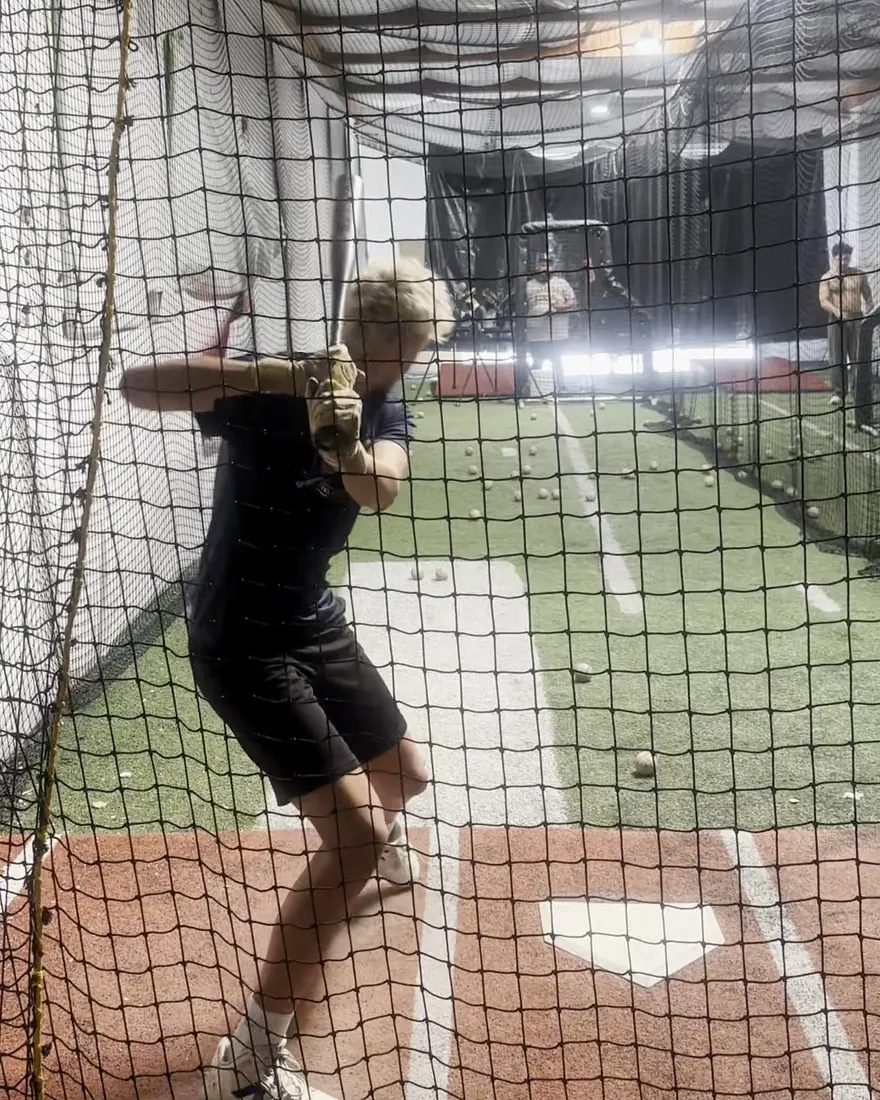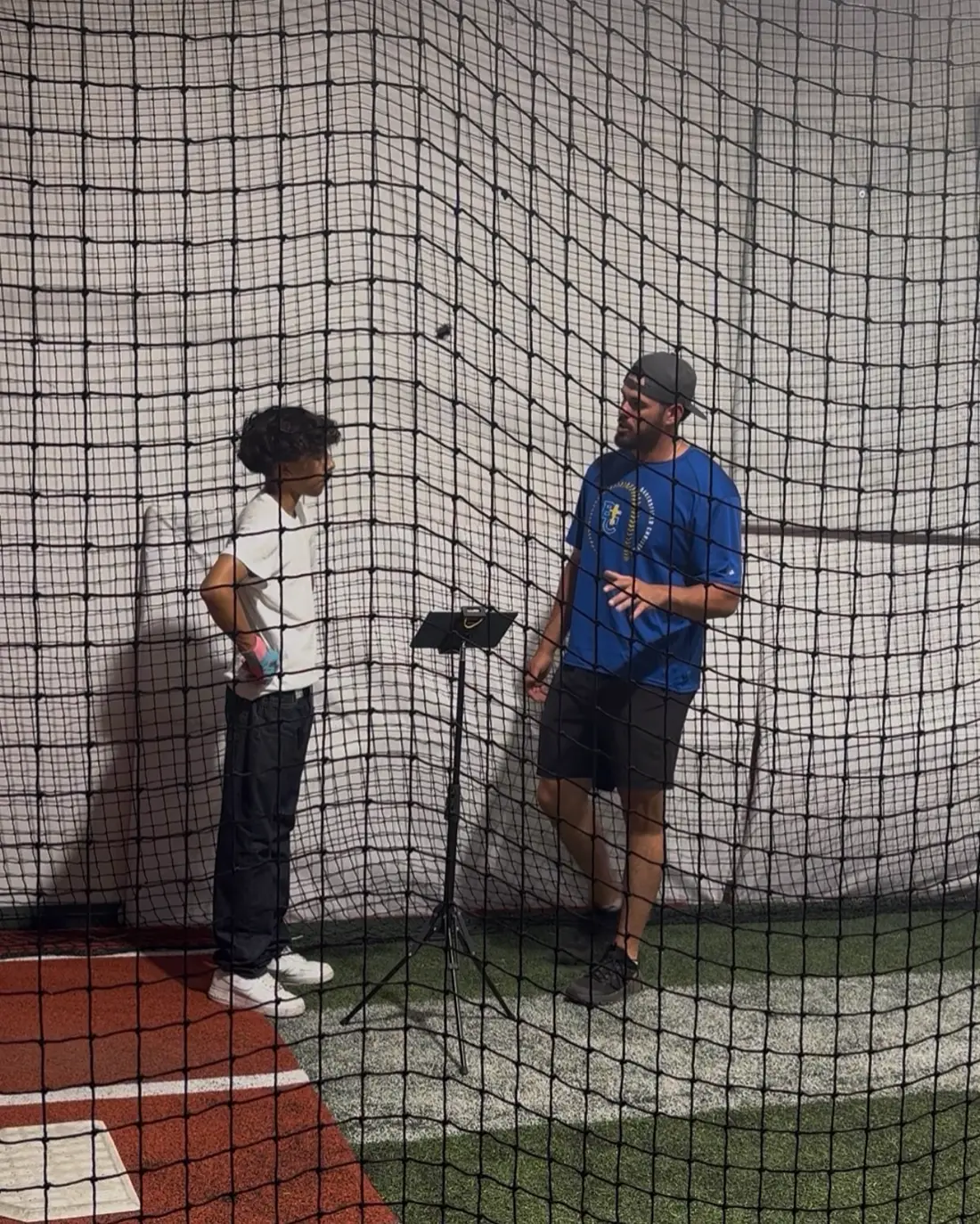
Hours aren't a plan.
Time: How most kids train
- More swings.
- More cage hours.
- Another hour with a hitting coach.
- Practices. Games.
- Hope something clicks.
Intention: How he trains here
- An honest assessment of where he is.
- One thing he's working on, and why.
- A plan built for him.
- A retest that proves it moved.
Ask him what he's working on.
Here, he can tell you what it is and why.
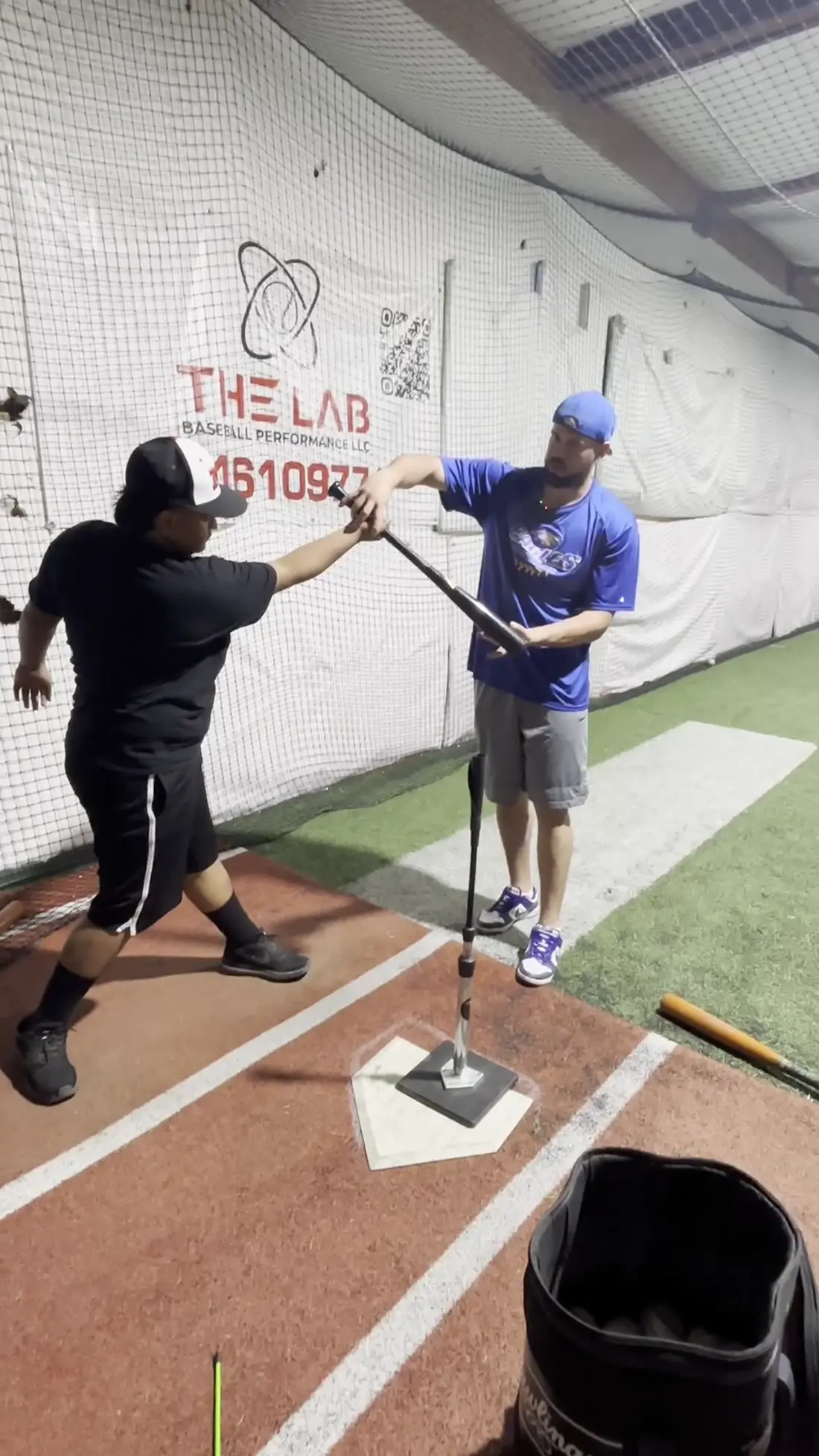
One thing. Then prove it moved.
Assess
We film him, measure him, and talk with him. You hear where he actually is.
Focus
One thing to work on, picked from the assessment.
Plan
His sessions are built around that one thing.
Retest
Same measure as day one. If it moved, we pick the next thing. If it didn't, we change the plan.
It moved for kids like him.
Every high school hitter's first two sessions next to his last three.
73.3 to 76.9 mph
70% to 79%
That's about 17 sessions over about 4 months.
Every high school hitter with 6+ sessions: first 2 sessions vs last 3, measured on Full Swing. Group averages, not our best kid. Median exit velo gain: +3.1 mph.

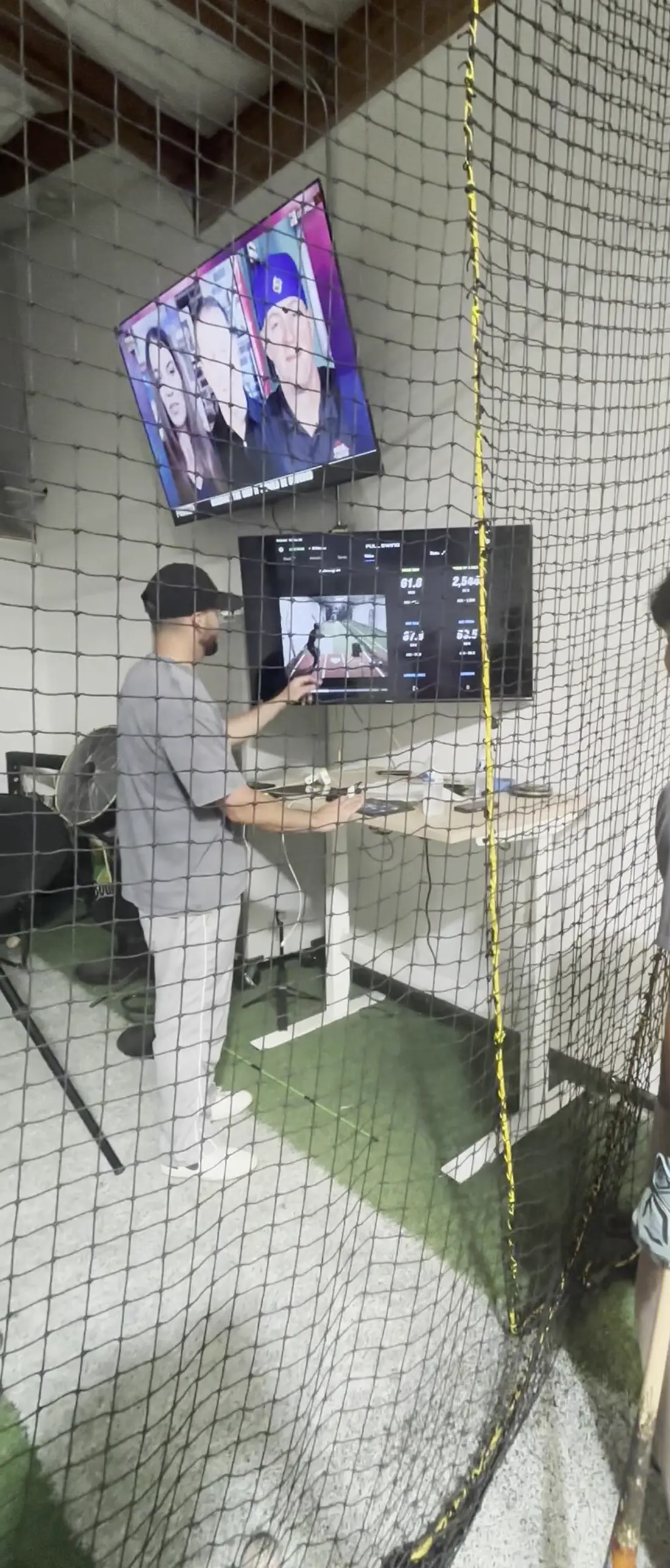
Weeknights on the floor.
A room full of high school hitters. Every one of them knows what he's working on.
Hear it from them.
Two of our high school players, in their own words.
Tell us about him.
Tell us where he is and where he wants to be. If we don't think we can help him, we'll tell you.